
Class 4 Basic Antonyms Hot/Cold Tall/Short Worksheet

Class 4 Basic Antonyms Hot/Cold Tall/Short Worksheet
Opposites All Around: Basic Antonyms (Hot/Cold, Tall/Short) for Class 4
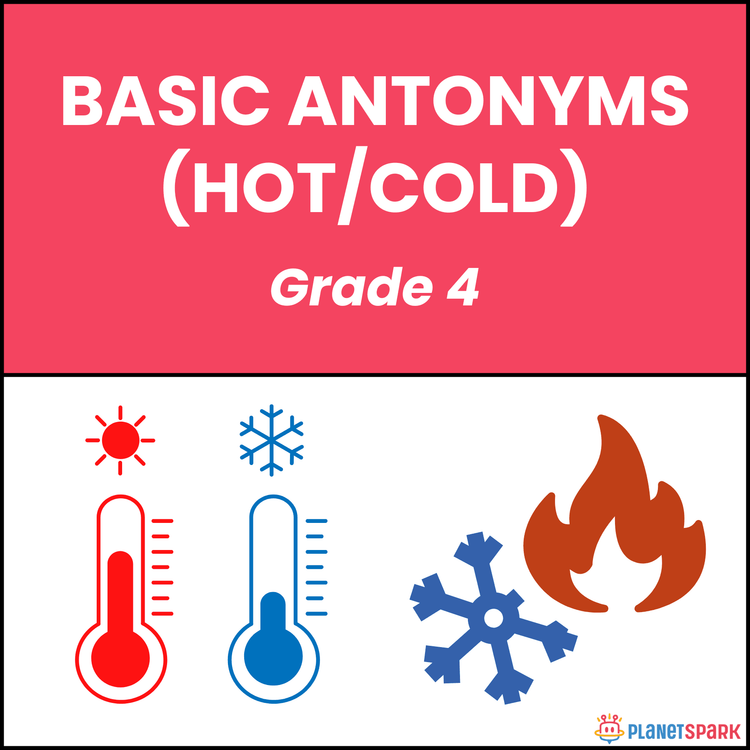
This Grade 4 worksheet introduces students to the concept of basic antonyms — words that have opposite meanings — through engaging, real-life sentence contexts. Featuring familiar word pairs like hot/cold, tall/short, fast/slow, happy/sad, and more, this resource helps Class 4 learners build a strong foundation in vocabulary and grammar in a clear and age-appropriate way.
Why Do Antonyms Matter in Grammar?
Antonyms are essential building blocks of language. For Grade 4 learners, understanding antonyms is important because:
1. They help children understand contrast and comparison in reading and writing.
2. They strengthen vocabulary by teaching words in meaningful pairs.
3. They improve sentence construction and descriptive writing skills.
4. They are commonly tested in exams and appear across all subjects in everyday language.
What's Inside This Worksheet?
This worksheet includes five well-structured activities that build antonym recognition and usage across different contexts:
Exercise 1 – Match the Following
Students match each word on the left to its correct antonym on the right. Word pairs include hot/cold, big/small, day/night, dark/light, tall/short, fast/slow, early/late, begin/end, open/close, and happy/sad. This activity builds quick recognition of opposite word pairs.
Exercise 2 – Sort the Words
Students are given a mix of word pairs and must sort them into two columns — Antonyms and Non-Antonyms. This critical thinking task helps learners tell the difference between true opposites and words that are simply different from each other.
Exercise 3 – Fill in the Blanks
Students choose the correct word from a given pair to complete each sentence. With 10 contextual sentences, this exercise helps learners understand how antonyms work in real sentence settings and which word fits the meaning best.
Exercise 4 – Multiple Choice Questions
Students select the correct antonym from four options to complete each sentence. With 10 questions across two pages, this activity reinforces antonym identification in a test-style format, building both vocabulary skills and exam confidence.
Exercise 5 – Sentence Rewriting
Students rewrite 10 given sentences by replacing the key word with its correct antonym to add contrast. This creative task encourages learners to think about how changing one word can completely flip the meaning of a sentence.
Answer Key (For Parents & Educators)
Exercise 1 – Match the Following
hot → cold
big → small
day → night
dark → light
tall → short
fast → slow
early → late
begin → end
open → close
happy → sad
Exercise 2 – Sort the Words
Antonyms:
hot/cold
early/late
tall/short
begin/end
open/close
happy/sad
fast/slow
big/small
Non-Antonyms:
cat/dog
rain/train
green/blue
table/chair
walk/run
sun/moon
book/pen
Exercise 3 – Fill in the Blanks
1. hot (hot / cold)
2. smaller (bigger / smaller)
3. sad (happy / sad)
4. short (tall / short)
5. close (open / close)
6. slow (fast / slow)
7. early (early / late)
8. begin (begin / end)
9. day (day / night)
10. dark (light / dark)
Exercise 4 – Multiple Choice Questions
1. b) hot
2. b) bigger
3. d) open
4. a) sad
5. c) tall
6. d) early
7. b) fast
8. a) begin
9. c) night
10. b) dark
Exercise 5 – Sentence Rewriting
1. Please close the door when you leave.
2. A big whale swam by.
3. He felt happy after winning.
4. The short puppy could not jump.
5. The tea is hot on the stove.
6. She ran fast and won the race.
7. We arrived early to see the sunrise.
8. The show will begin at six.
9. Stars come out in the night.
10. Turn on the lamp when it's dark.
Help your child master the language of opposites with a Free 1:1 English Grammar Trial Class at PlanetSpark — strong vocabulary skills start with knowing both sides of every word!
Frequently Asked Questions
Antonyms are words with opposite meanings, like hot and cold, tall and short, which create contrast in sentences.
Understanding antonyms builds vocabulary and helps children create more descriptive, meaningful sentences.
By practicing opposite word pairs through fun games, flashcards, and sentence-building activities.